Gym Equipment for the Office: A Guide to Building a Space- and Cost-Efficient Gym

Providing an office gym can support employee wellness programs, but companies need to consider space limitations, budget, and employee needs. Without proper planning, equipment may go unused or obstruct activity within the space.
Therefore, gym equipment procurement should be tailored to the number of users, types of exercise, and facility usage patterns. Treadmills, exercise bikes, dumbbells, and multi-function machines can be prioritized based on company needs.
In addition to selecting equipment, companies also need to plan the layout, ensure safety, and account for maintenance costs. With such planning, a corporate gym can become a functional, efficient facility that fits the company budget.
Why Should Companies Provide Office Gym Facilities?
Office gym facilities are one way companies can support active lifestyles and employee wellness programs. They provide employees with access to physical activity without having to visit a fitness center outside the workplace.
However, the benefits of these facilities are not determined solely by the number of pieces of equipment available. Companies need to ensure that the equipment meets users' needs and is easily accessible for daily use.
Several goals to consider when setting up an office gym include:
- Supporting wellness programs: Providing employees with a way to incorporate physical activity into their daily routines.
- Improving workplace comfort: Providing additional facilities that employees can use before work, during breaks, or after hours.
- Enhancing the employee experience: Creating a work environment that considers employees' needs and comfort.
- Optimizing company facilities: Transforming available space into a physical activity area with a clear purpose.
Companies need to determine their primary goal from the outset so that gym equipment selection is not merely based on trends or particular preferences. This ensures that each piece of equipment procured serves a purpose relevant to the company's facility program.
Read also: SVRG: Trusted No. 1 Choice for Gym Equipment Suppliers
Template SOP Operasional Gym
Bangun sistem operasional gym yang rapi dan mudah diawasi. Berisi 7 template SOP, mulai dari front desk, kebersihan, dan maintenance equipment sampai penanganan keluhan member, lengkap dengan checklist harian dan target KPI.
Things to Consider Before Choosing Gym Equipment for the Office
1. Employee Wellness Program Goals
Determine the types of activities to be accommodated, from cardio and strength training to functional training. For light activity, companies can prioritize treadmills and exercise bikes, while strength training requires dumbbells, adjustable benches, or resistance training machines.
Equipment selection should also consider the characteristics of potential users. If the facility will be used by employees with varying experience levels, prioritize equipment that is easy to use and accommodates a range of abilities.
2. Room Size and User Capacity
Room size determines the quantity and types of equipment that can be procured. In limited spaces, prioritize multifunctional equipment and ensure there is sufficient room to move and access the equipment as required by its installation.
Companies should also estimate the number of employees who may use the facility on a rotating basis. This allows the gym's capacity to be adjusted without having to provide as many pieces of equipment as there are employees.
3. Usage Patterns and Peak Hours
Consider when the gym will be used, such as before work, during lunch breaks, or after hours. This information helps companies estimate equipment needs and manage facility usage.
If several employees exercise at the same time, provide a combination of cardio and strength training equipment to offer a wider range of activity options. For existing gyms, evaluate usage through a reservation system or simple log before adding more equipment.
4. Safety and Ease of Use
Because office gyms are used by employees with varying experience levels, prioritize equipment that is easy to operate and has adequate safety features. Some aspects to consider include:
- Clear instructions for use on every machine.
- Structural stability and load capacity.
- Safety features, such as emergency stops on treadmills.
- The condition of cables, weight locks, and mechanical components.
- Non-slip flooring and sufficient room to move.
Companies should also provide user guides and procedures for reporting damage. For heavy equipment, consider supervision by competent personnel.
5. Durability and Maintenance
Choose equipment based on usage frequency and the number of potential users, especially if it will be used by many employees on a rotating basis. Some aspects to check include:
- Material and construction quality.
- Availability of spare parts.
- Manufacturer or distributor warranty terms.
- Ease of inspection and routine maintenance.
- Availability of technical support.
In addition to the purchase price, also consider long-term maintenance and ownership costs. Cheaper equipment may not be cost-effective if it requires more frequent repairs or if spare parts are difficult to obtain.
Read also: Initial Capital Requirements for Opening a Gym Without Breaking the Bank
Recommended Gym Equipment for the Office & Supporting Facilities
Once facility requirements and room capacity have been determined, companies can begin selecting equipment based on the types of exercise they want to offer. Here are five categories of gym equipment to consider for a corporate gym:
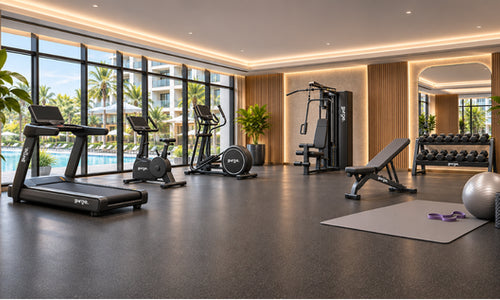
- Treadmills for Cardio Areas: Treadmills support walking and running for office cardio facilities. Consider weight capacity, motor specifications, safety features, and machine dimensions.
- Exercise Bikes for Alternative Cardio Workouts: Exercise bikes provide an alternative cardio workout option from a seated position. Consider the type of bike, resistance, comfort, and equipment stability.
- Dumbbells and Adjustable Benches for Strength Training: Together, they support a variety of strength training exercises without requiring many specialized machines. Consider the weight range, material quality, bench stability, and storage racks.
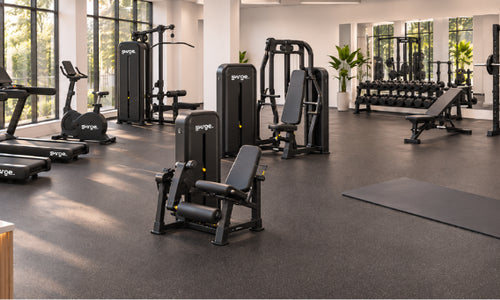
- Multi-Function Machines for Space Efficiency: Multi-function machines combine several strength training exercises in one piece of equipment. Check the number of stations, exercise variations, weight capacity, and machine dimensions.
- Yoga Mats and Functional Training Equipment: This equipment supports stretching, mobility, and functional training activities. Consider yoga mats, resistance bands, medicine balls, stability balls, and storage solutions.
To complete the setup, companies should also provide supporting facilities such as rubber flooring, lockers, mirrors, storage racks, and waste bins to keep the gym area safe and organized.
Ensure that ventilation, lighting, and cleaning supplies are also provided to maintain the comfort and condition of the facility during use.
Read also: Complete Differences Between Home Use & Commercial Gym Equipment
How to Prioritize Gym Equipment Procurement?
Companies do not need to purchase all equipment at once to build a functional corporate gym. Procurement can be done gradually, prioritizing the equipment most relevant to the facility's purpose, room capacity, and employee usage patterns.
Some priority categories that can serve as a guide include:
- Top priority: Basic equipment such as treadmills, exercise bikes, or dumbbells suited to the most needed type of exercise.
- Next priority: Adjustable benches and multi-function machines to expand the variety of strength training exercises.
- Additional priority: Resistance bands, medicine balls, stability balls, and other functional training equipment.
Once the facility is in use, companies can evaluate usage frequency and employee needs. The results of this evaluation can serve as a basis for determining additional equipment without allocating budget to equipment that is not yet needed.
Read also: Gym Equipment for Hotels: A Guide to Choosing the Right Fitness Equipment
Example of Dividing an Office Gym Area with Limited Space

An office gym does not need to have many separate rooms. Companies can combine several exercise categories in one area as long as the layout considers the flow of movement and the operational needs of each piece of equipment.
For example, companies can use the following approach to divide the space into zones:
|
Area |
Equipment |
Function |
|
Cardio Zone |
Treadmills and exercise bikes |
Provides cardio exercise options |
|
Strength Zone |
Dumbbells, adjustable benches, and multi-function machines |
Supports strength training |
|
Functional Zone |
Yoga mats, resistance bands, and medicine balls |
Supports mobility and functional training |
|
Storage Area |
Dumbbell racks and storage cabinets |
Keeps equipment organized |
This division is flexible and should be adjusted to the shape of the room, equipment dimensions, and number of users.
For limited spaces, prioritize multifunctional and easily storable equipment, while larger areas can be divided into cardio, strength training, and functional training zones. Ensure that the layout also considers circulation paths, entry and exit access, ventilation, lighting, and electrical installation requirements.
Read also: 100m2 Gym Layout: Efficient Zone Division and Equipment Arrangement
How to Prioritize Gym Equipment Procurement?
In addition to determining equipment and layout, companies should avoid several procurement mistakes so that the gym facility can be used optimally and sustainably. Here are some things to consider before starting construction:
- Buying Too Much Equipment from the Start: Prioritize equipment based on user needs and add more gradually after evaluating usage levels.
- Ignoring Operational Space Requirements: Account for space for access, movement, and equipment use so that the layout is not too crowded and remains safe.
- Not Accounting for Maintenance Costs: Allocate a budget for servicing, component replacement, and routine inspections so that equipment continues to function properly.
- Ignoring User Characteristics: Choose equipment that is easy to operate and has usage levels suited to the varying abilities of employees.
Not Having Facility Usage Rules: Establish usage procedures, user capacity, maintenance schedules, and damage reporting mechanisms so that gym operations are more organized.
Read also: Complete Gym Operating Procedures (Example + Template)
When Should Companies Involve a Vendor to Set Up a Corporate Gym?
Creating an equipment list yourself can be a good first step. However, when a company begins determining specifications, layout, and procurement needs, consulting a vendor can help clarify decisions.
This is especially relevant if the company faces any of the following conditions:
- The room's shape or size limits equipment choices.
- The company needs a combination of cardio, strength, and functional training equipment.
- Procurement must adhere to a budget and specific standards.
- The facility will be used by many employees with different usage patterns.
- The company needs equipment recommendations, layout planning, and a quotation all in one plan.
During the consultation process, prepare information about the room size, desired facility concept, estimated number of users, and procurement budget. This information helps the vendor provide more relevant recommendations than simply offering a product list.
Read also: How to Choose Rubber Flooring for Gyms and Fitness Centers
Build an Office Gym Facility That Meets Company Needs
An effective corporate gym does not always need many machines or a large room. The most important factor is the alignment between the facility's purpose, employee needs, equipment selection, and the company's ability to manage it.
By determining priorities from the outset, companies can build a more functional facility while avoiding spending on equipment that is not yet needed.
If you are planning an employee gym facility, the SVRG team can help determine equipment needs, layout, and package recommendations based on room size and the company budget. Consult with the SVRG team to design a more suitable and efficient setup for your corporate gym.
Need a gym setup recommendation tailored to your space?
Please provide room dimensions, business concept, and budget. The SVRG team can then assist with more suitable equipment recommendations, layout, and packages.
Commercial Gym Consultation